How to neutralize unwanted tones in hair
Master color theory to correct orange, yellow, and red tones. Practical guide with formulas and real examples.
Blendsor
Blendsor Team
How to Neutralize Unwanted Tones in Hair
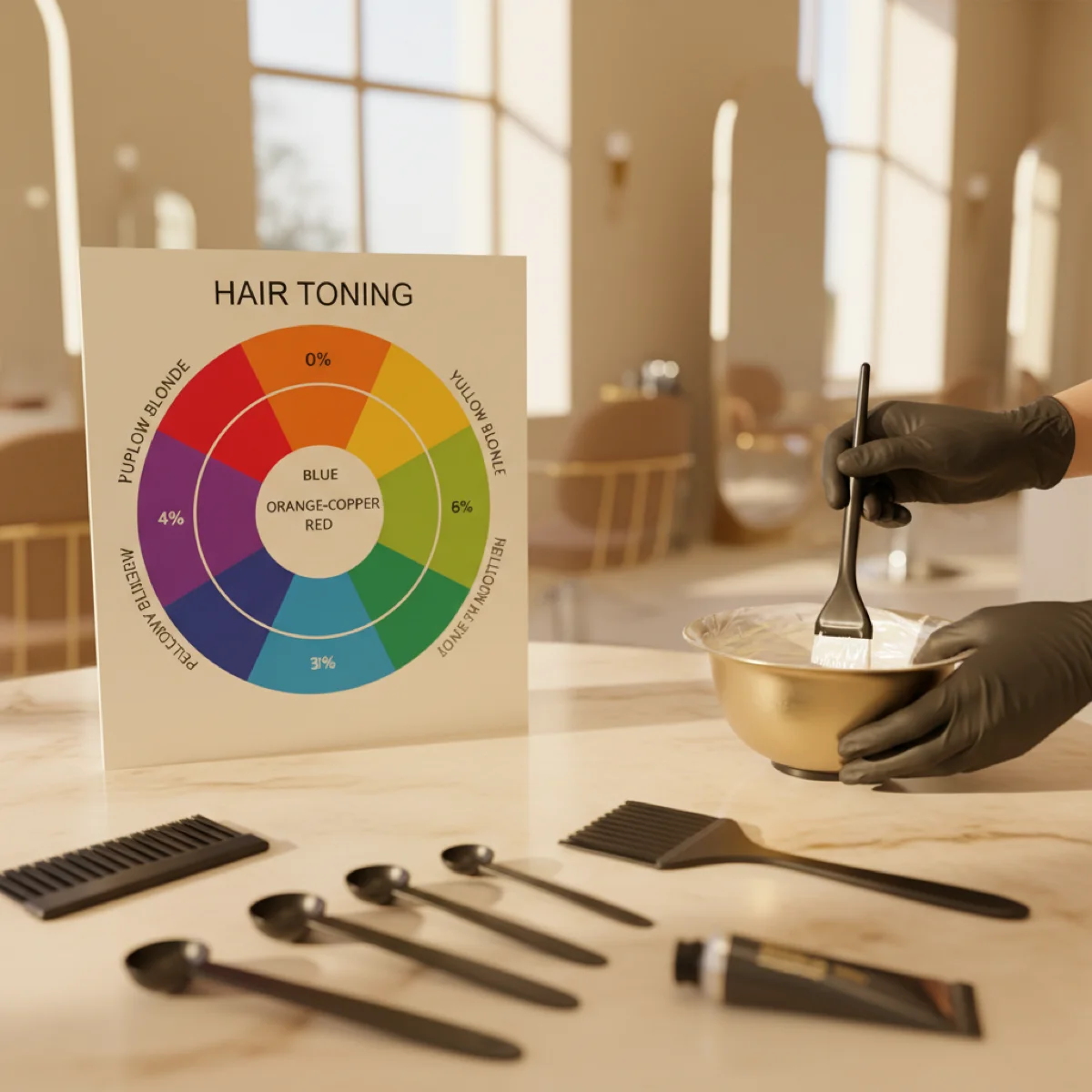
To neutralize unwanted hair tones, use complementary colors: blue cancels orange, violet cancels yellow, and green cancels red. The key is matching the intensity of your corrector to the intensity of the unwanted tone—too little won’t work, too much creates muddy results.
The brassy orange after a bleach. The straw yellow that won’t go away. The red peeking through where it shouldn’t. Every colorist has faced these color ghosts. For the complete science behind why this works, see our guide to hair colorimetry basics.
The color wheel: your best friend
Neutralization is based on a simple principle: opposite colors cancel each other out.
| Unwanted tone | Neutralizing color |
|---|---|
| Orange | Blue |
| Yellow | Violet |
| Red | Green |
| Green | Red |
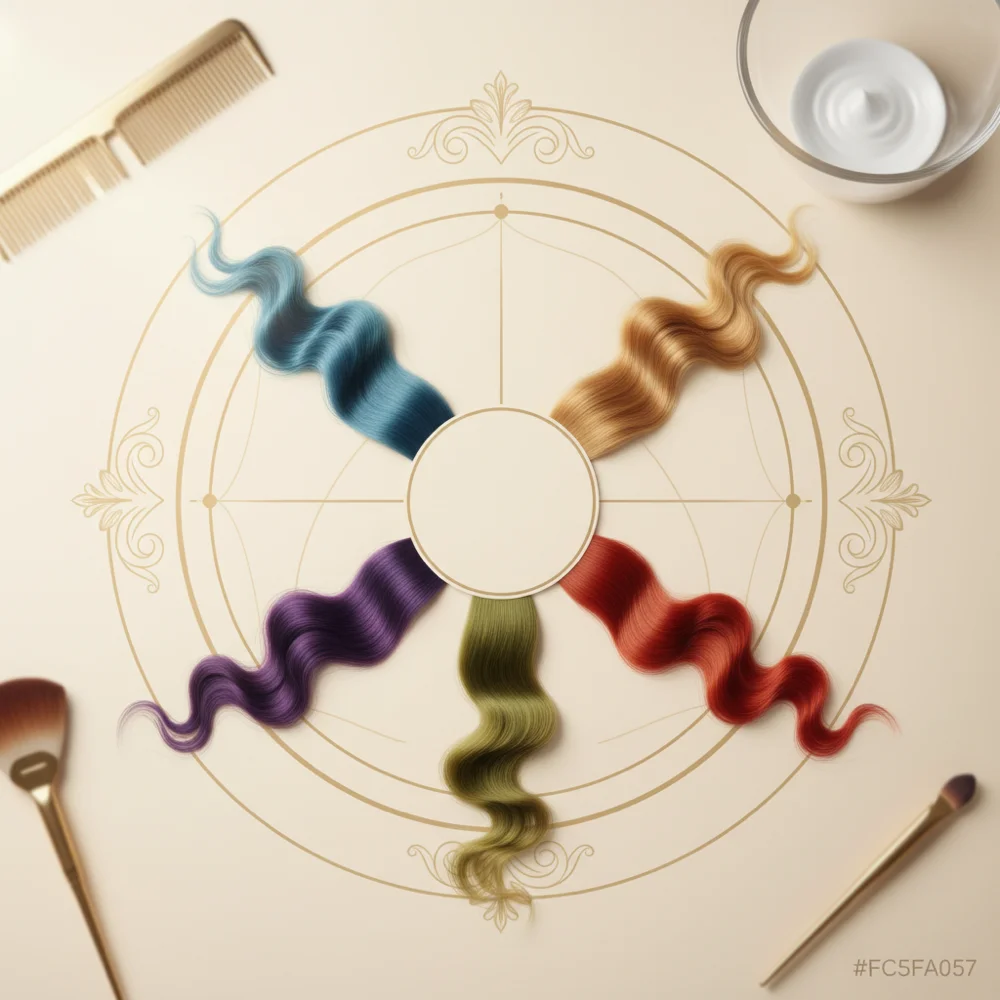
When you mix a color with its opposite in equal proportions, you get a neutral tone (brown or gray, depending on the level).
Neutralizing orange
Orange typically appears in:
- Bleaching that hasn’t reached the desired level (check our color levels guide to understand why)
- Dark dyed hair being lightened
- Exposed level 5-6 hair
Practical solution
-
Identify the orange intensity
- Intense orange → Pure blue (.1 or ash)
- Yellow-orange → Blue-violet (.01 or ash-pearl)
-
Sample formula for level 6 orange
- 7.1 (30g) + 7.01 (20g) + 7 (10g)
- 10 vol. developer (1:1.5)
The touch of natural base (.0) prevents the result from looking too “muddy” or dull.
Neutralizing yellow
Straw yellow is enemy number one for cool blondes. It appears in:
- Natural blondes with warm undertones
- Bleaching that reaches level 8-9
- Highlights that oxidize in the sun
Practical solution
-
Violet is your friend
- .2 reflect (pearl/violet)
- Pure violet toners
-
Sample formula for toning yellow blonde
- 9.21 (40g) + 10.01 (20g)
- 6-10 vol. developer (1:2)
- Time: 10-15 minutes maximum
Caution: Excess violet creates gray or even pink tones. Less is more.
Neutralizing red
Unwanted red usually comes from:
- Previous dyes with red bases
- Oxidized henna
- Underlying pigment at levels 1-4
Practical solution
Green neutralizes red, but never use pure green (you’d get a muddy tone). Instead:
-
Use ash with matte base
- .13 reflect (ash-gold)
- .31 reflect (gold-ash)
-
Sample formula for level 5 with residual red
- 6.13 (30g) + 6.1 (30g)
- 20 vol. developer (1:1)
Golden rules of neutralization
1. Accurate diagnosis first
You can’t neutralize what you can’t identify. Before formulating:
- Is it orange, yellow-orange, or red-orange?
- What intensity level is it?
- Is it evenly distributed or in patches?
2. Proportion matters
- Light unwanted tone: 1/4 corrector
- Medium unwanted tone: 1/3 corrector
- Intense unwanted tone: 1/2 corrector
3. The corrector level
Always use a corrector at the same level or 1 level higher than the desired result. Darker corrector = muddier result.
4. Validate with a test strand
When in doubt, apply to a hidden strand. Wait the full time. Rinse and dry. Only then apply the rest.
Common mistakes
| Mistake | Consequence | Solution |
|---|---|---|
| Excess ash at low level | Greenish/grayish tone | Add gold or copper |
| Violet on orange | Won’t neutralize (needs blue) | Reformulate with ash |
| Corrector too dark | Dull, lifeless tone | Use higher level corrector |
| Excessive toner time | Over-neutralization | Reduce time to 5-10 min |
Blendsor helps you formulate
Unsure which corrector to use? With Blendsor you can:
- Upload a photo of current hair
- Indicate the desired tone
- Receive a formula with exact neutralization proportions
The AI considers the current level, present reflects, and your favorite brand to give you a precise formula.
Frequently Asked Questions
What color cancels out orange in hair?
Blue cancels orange. Use ash tones (.1 reflect) for intense orange, or ash-violet (.01 reflect) for yellow-orange. The key is matching the blue intensity to the orange intensity—pure blue for pure orange.
How do I fix yellow brassy tones in blonde hair?
Violet (purple) cancels yellow. Use toners with .2 reflect (pearl/violet) or purple shampoos for maintenance. For professional toning, apply at 6-10 vol developer for 10-15 minutes maximum—excess violet creates gray or pink tones.
Why does my hair turn orange when I bleach it?
Orange appears because you’ve exposed the hair’s underlying pigment (also called contributing pigment) but haven’t lifted past it yet. Hair at levels 5-6 naturally contains orange pigment. To avoid orange, either lift further or neutralize with blue-based tones.
Can I use purple shampoo on orange hair?
No—purple shampoo is designed for yellow tones, not orange. For orange hair, you need blue-based products (blue shampoo or professional ash toners). Using purple on orange won’t neutralize it effectively.
Key Takeaways
- Orange → Blue: Use ash tones (.1) or ash-violet (.01)
- Yellow → Violet: Use pearl/violet tones (.2)
- Red → Green: Use ash-gold (.13) or gold-ash (.31), never pure green
- Match intensity: Light unwanted tone = 1/4 corrector; intense = 1/2 corrector
- Test first: When in doubt, always do a strand test
Unsure which corrector to use? Blendsor analyzes your client’s current tone and calculates exact neutralization proportions for any brand.
Want scientific precision in your formulas?
Blendsor analyzes photos and generates exact formulas for your clients.
Try for free