7 common color formulation mistakes (and how to avoid them)
The mistakes even experienced colorists make. Learn to identify and correct them before they ruin your work.
Blendsor
Blendsor Team

7 Common Color Formulation Mistakes
The 7 most common hair color formulation mistakes are: misdiagnosing base level, ignoring color history, wrong developer volume, incorrect proportions, miscalculating times, mixing incompatible brands, and skipping test strands. Even experienced colorists make these errors—here’s how to avoid them.
You’ve been coloring hair for years. Hundreds of applications. And yet, occasionally, something goes wrong. Most of these “accidents” are entirely preventable once you know what to watch for. For a solid foundation in color science, start with our complete guide to hair colorimetry basics.
1. Not correctly diagnosing the base level
The mistake: Assuming the tone level “by eye” without verifying with the swatch book.
The consequence: You formulate for a level 6, but the client is level 5. The result comes out darker or the reflect doesn’t turn out as expected.
The solution:
- Always compare with your brand’s swatch book
- Use natural or neutral light (never the salon’s warm lighting)
- Check the nape area, less affected by sun
- Consider that grays “deceive” by raising the perceived level
With Blendsor, you can photograph the hair and the AI identifies the level with precision.
2. Ignoring color history
The mistake: Formulating without asking what dyes have been used before.
The consequence: Incompatible chemical mixes, unpredictable results, or severe hair damage.
Key questions:
- When was your last color?
- What brand did they use?
- Have you ever used henna?
- Have you had bleaching or highlights?
- Do you use products with colorants (color-depositing shampoos)?
The solution: Keep detailed client cards. Note everything: formulas, brands, times, results.
3. Choosing the wrong developer volume
The mistake: Always using the same developer “because that’s what I have.”
The consequence: Insufficient or excessive lift, unnecessary damage, poor gray coverage. Learn exactly which volume to use in our complete developer guide.
| Goal | Recommended developer |
|---|---|
| Tone on tone (no lift) | 6 vol. (1.9%) |
| Lift 1 level | 10 vol. (3%) |
| Lift 2 levels | 20 vol. (6%) |
| Lift 3 levels | 30 vol. (9%) |
| Lift 4 levels | 40 vol. (12%) |
| Gray coverage | 20 vol. minimum |
The rule: Use the minimum developer necessary to achieve the goal. More isn’t better.
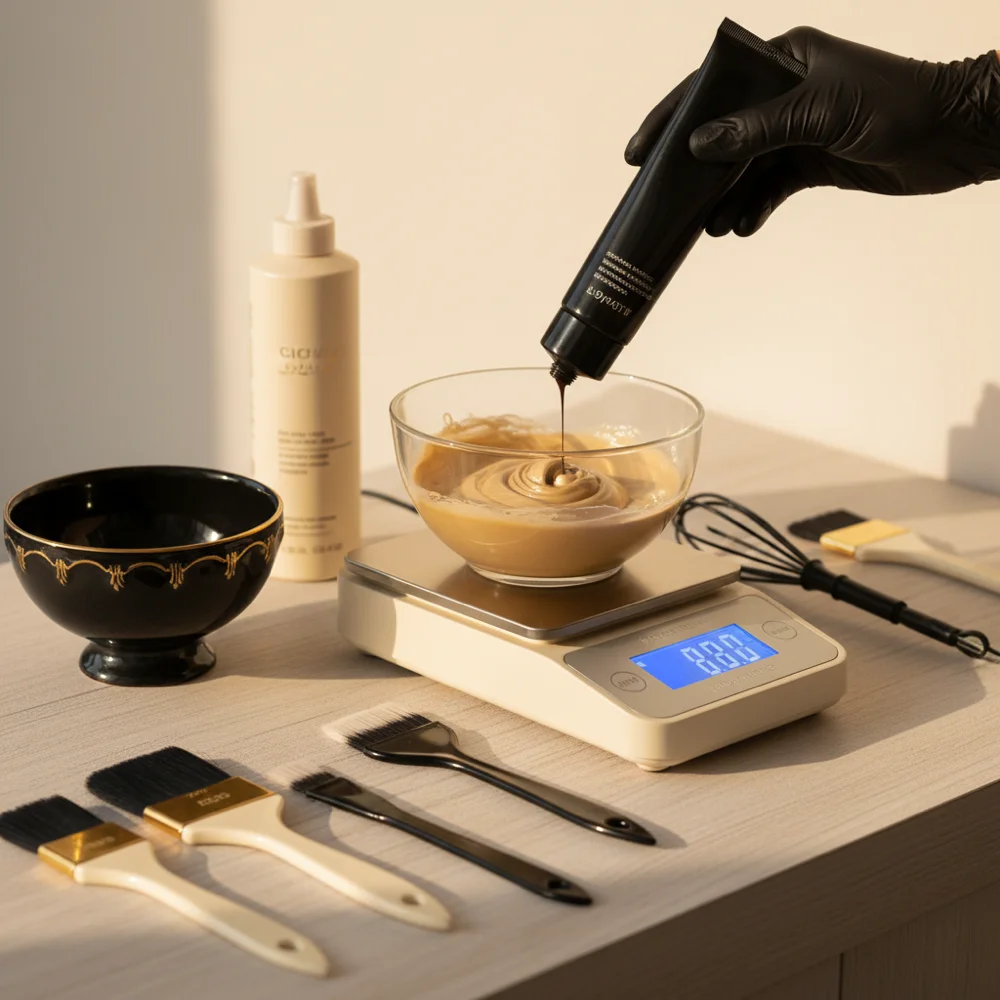
4. Not respecting proportions
The mistake: Mixing “by eye” without weighing or measuring.
The consequence: Incorrect consistency, uncertain exposure time, inconsistent results.
Standard proportions:
- Permanent dye: 1:1 or 1:1.5 depending on brand
- Bleach: 1:2 (powder:developer)
- Color gloss: 1:2 or 1:3
The solution: Use a precision scale. Always. The investment is minimal compared to the cost of a mistake.
5. Miscalculating times
The mistake: “I’ll leave it a bit longer for better coverage” or “It’s too dark, I’ll remove it early.”
The consequence: Over-pigmentation, accumulated damage, uneven coverage.
Standard times:
- Permanent dye: 30-45 minutes
- Gray coverage: 45 minutes (full time)
- Toners: 5-15 minutes
- Bleach: according to product and result (monitor constantly)
The solution: Use a timer. Don’t trust your perception of time when you’re with other clients.
6. Mixing incompatible brands
The mistake: Using one brand’s dye with another brand’s developer.
The consequence: Unpredictable reactions, altered times, inconsistent results.
Why this happens:
- Each brand formulates their system (dye + developer) to work together
- Stabilizers and conditioners vary
- Exposure times are calibrated for their developer
The solution: Always use dye and developer from the same brand and line. If you change brands, do it completely.
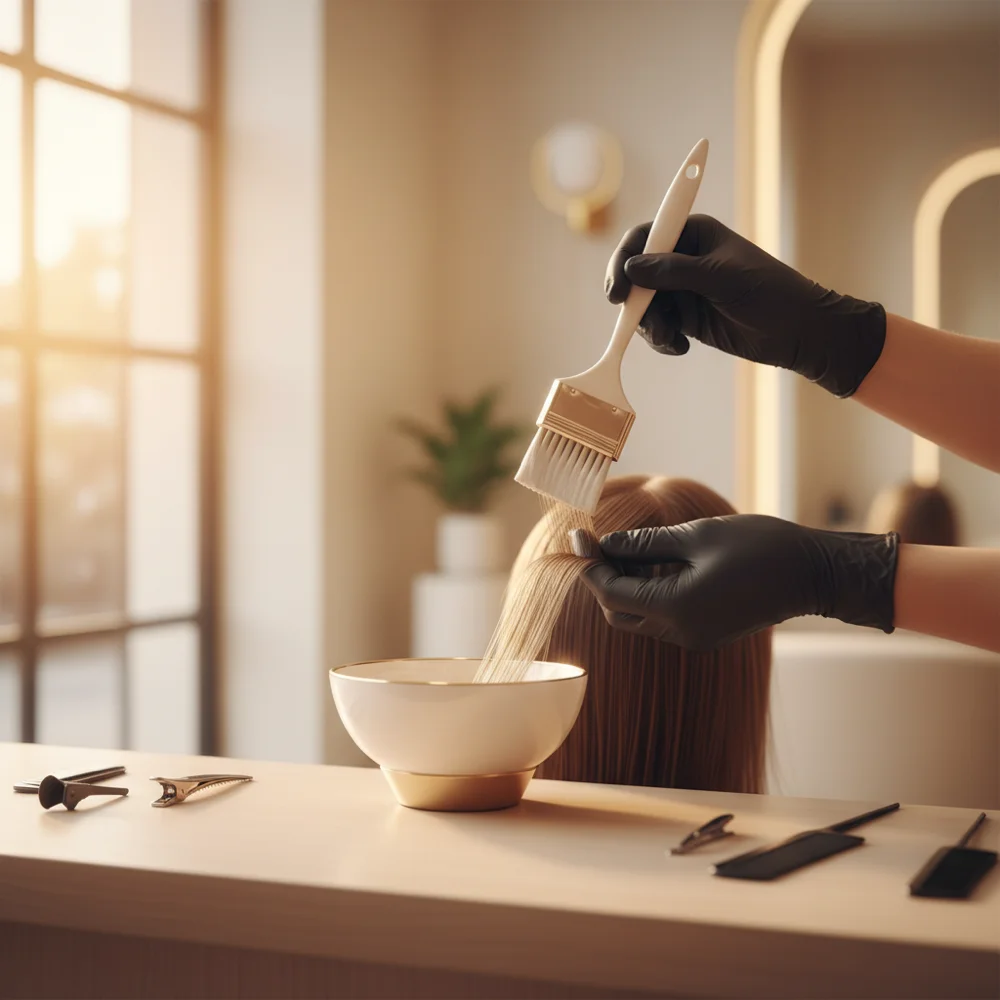
7. Not doing a test strand
The mistake: Trusting that “this tone always works for her.”
The consequence: Allergic reactions, unexpected results on previously treated hair.
When a test strand is mandatory:
- Client’s first visit
- Radical color change
- Hair with multiple previous treatments
- After using henna or metallic products
- Any doubt about the result
How to do it:
- Select hidden strand (nape)
- Apply complete formula
- Respect full time
- Rinse, dry, and evaluate
- Only then apply the rest
Bonus: The ego mistake
Perhaps the most dangerous mistake isn’t technical, but attitudinal: believing you already know everything.
Colorimetry evolves. Brands launch new products. Trends change. Techniques improve.
The best colorist is one who:
- Continues training
- Asks questions (even after 20 years)
- Documents their formulas
- Learns from their mistakes
Blendsor as a safety net
Even the best make mistakes. Blendsor helps you prevent them:
- Before formulating: Consult with the AI if you have doubts
- During the process: Save formulas with notes
- After the service: Document the result for future visits
Think of Blendsor as that expert colleague you can ask anything, without embarrassment, 24 hours a day.
Frequently Asked Questions
What is the most common hair color formulation mistake?
Misdiagnosing the base level is the most frequent error. Colorists often estimate “by eye” instead of using a swatch book under neutral light, leading to formulas that are too dark, too light, or have unexpected reflects.
How do I know if I’m using the wrong developer volume?
Signs include: insufficient lift (color too dark), excessive lift with damage, poor gray coverage, or brassy results. The rule is simple—use the minimum volume needed to achieve your goal, not the maximum available.
Should I always do a strand test before coloring?
A strand test is mandatory for: first-time clients, radical color changes, hair with multiple previous treatments, after henna or metallic dyes, and whenever you have any doubt. The 10 minutes it takes can save hours of correction work.
Can I mix different brands of color and developer?
No. Each brand formulates their dye and developer system to work together. Mixing brands leads to unpredictable timing, inconsistent results, and potential chemical reactions. Always use the same brand and product line.
Key Takeaways
- Always diagnose base level with a swatch book under neutral light
- Document everything: color history, formulas, times, results
- Use minimum developer needed—more isn’t better
- Weigh, don’t estimate: precision scales prevent costly mistakes
- Test when in doubt: strand tests save hours of correction work
Ready to eliminate formulation guesswork? Blendsor calculates precise formulas based on your client’s current hair, desired result, and preferred brand.
Want scientific precision in your formulas?
Blendsor analyzes photos and generates exact formulas for your clients.
Try for free