Balayage vs traditional highlights: technical differences
Understand the differences between balayage, foil highlights, and other lightening techniques. When to use each and how to formulate correctly.
Blendsor
Blendsor Team
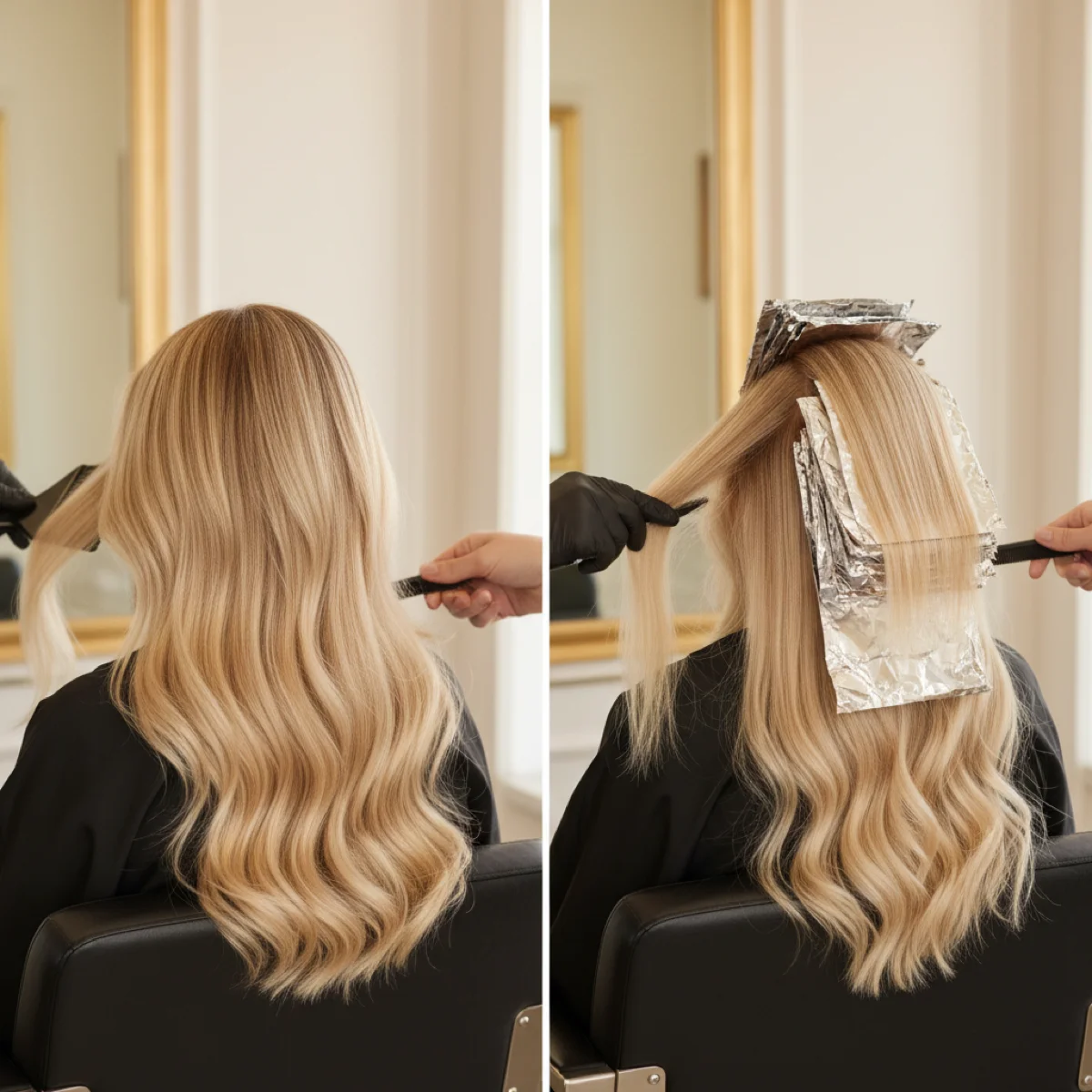
Balayage vs Traditional Highlights: Technical Differences
Balayage is a freehand painting technique creating soft, natural gradients, while traditional highlights use foils for more intense, uniform lift. Choose balayage for low-maintenance natural looks; choose foil highlights when clients need significant lift or have dark hair.
“I want something natural, like sun-kissed hair.” You hear this phrase every week. But which technique really suits your client? For the complete breakdown of professional lightening methods, see our guide to coloring techniques.
Traditional foil highlights
How they work
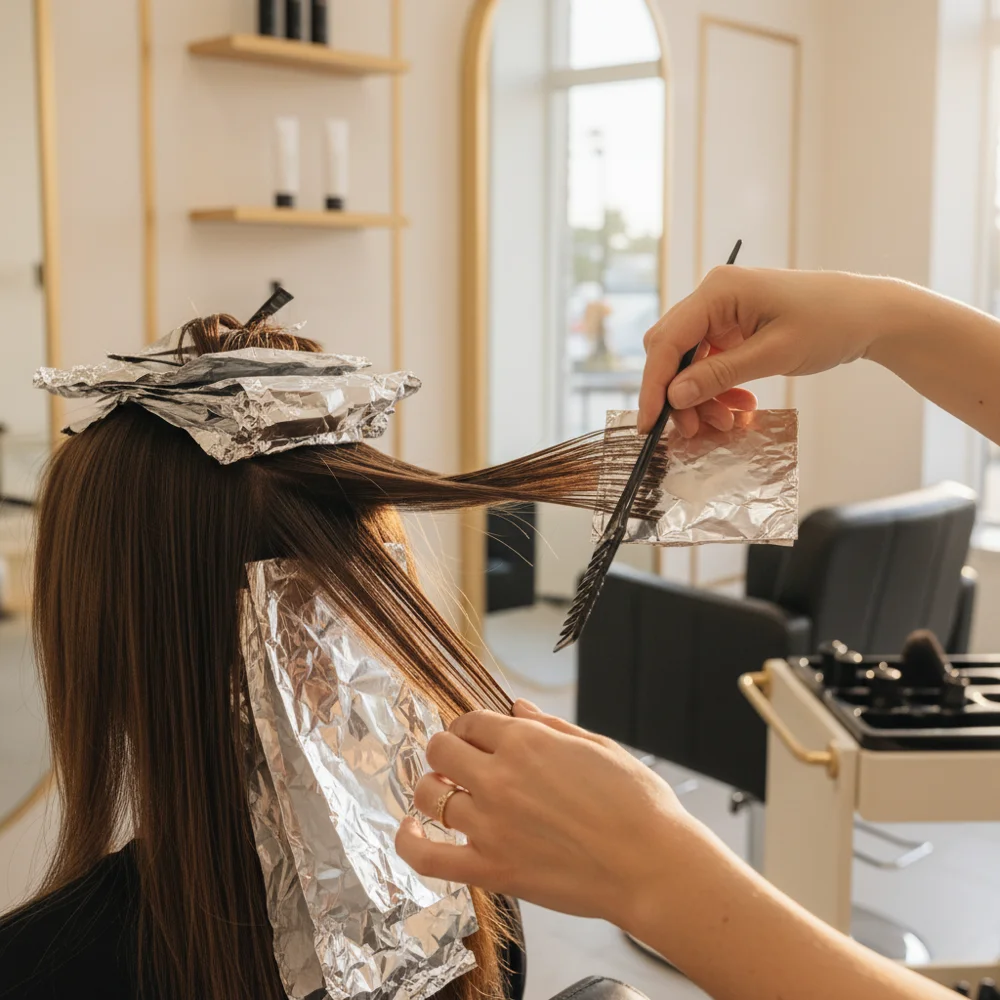
Hair sections are isolated and wrapped in aluminum foil with bleaching product. The foil:
- Retains heat
- Accelerates the process
- Prevents product from touching other sections
Typical result
- More intense and uniform lightening
- Marked contrast between light and dark strands
- More defined demarcation lines
When to choose them
| Situation | Foil highlights? |
|---|---|
| Client wants strong lift | Yes |
| Dark hair (level 2-4) wanting blonde | Yes |
| First significant lightening | Yes |
| Defined “salon” effect | Yes |
| Wants low maintenance | No (roots visible quickly) |
Typical formulation
- High-lift bleach powder
- 20-40 vol. developer depending on goal
- 1:2 ratio (powder:developer)
- Time: check every 10-15 minutes
Balayage
How it works
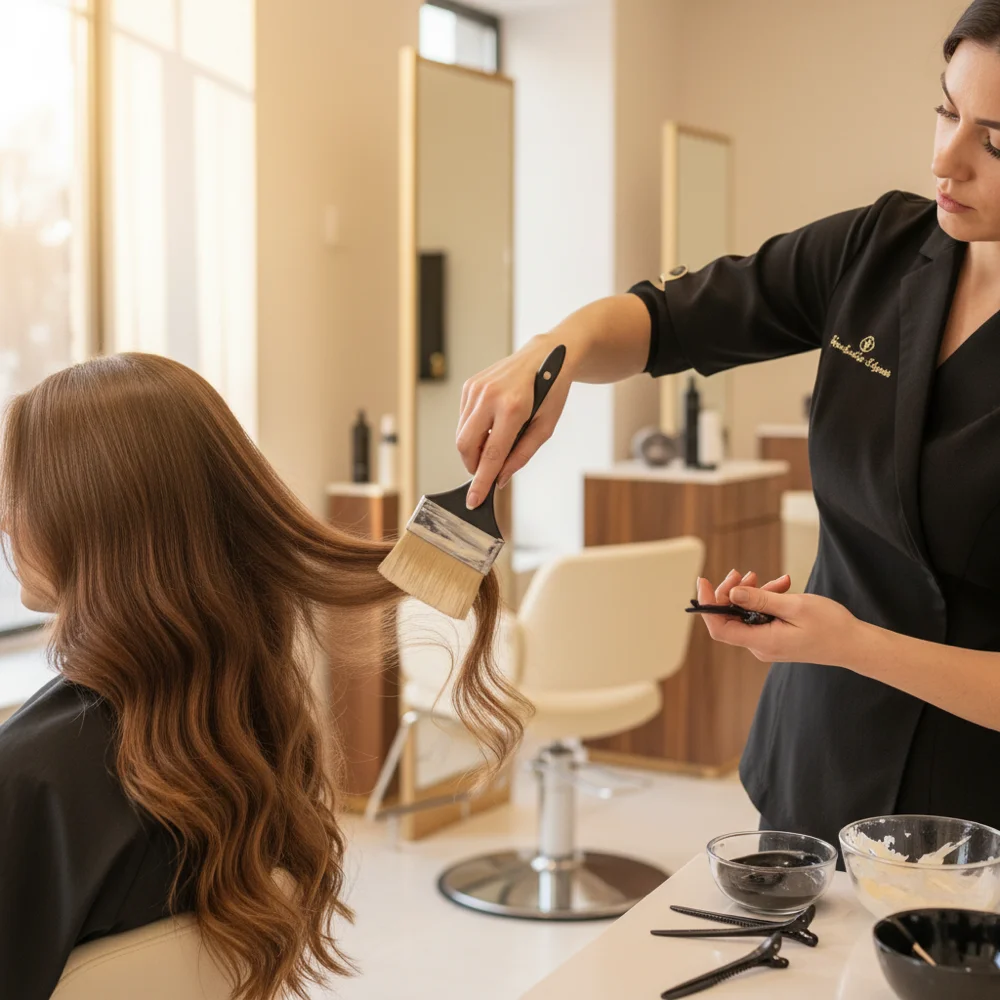
“Balayage” comes from the French “to sweep.” The product is applied with sweeping brush strokes, without foil, directly on the hair. The ends receive more product than the roots.
Typical result
- Natural gradient effect
- Smooth transition from dark to light
- No obvious demarcation lines
- “Sun-kissed hair” appearance
When to choose it
| Situation | Balayage? |
|---|---|
| Wants natural effect | Yes |
| Low maintenance | Yes (roots less visible) |
| First subtle lightening | Yes |
| Wants significant lift | No (softer effect) |
| Has lots of gray | No (doesn’t cover) |
Typical formulation
- Bleach powder with clay (more adhesive)
- 20-30 vol. developer
- 1:1.5 to 1:2 ratio
- Time: variable (monitor development without foil)
Other popular techniques
Babylights
What they are: Ultra-fine highlights with foil, mimicking children’s hair.
Result: Subtle dimension, natural shine, almost imperceptible at first glance.
When to use them: Conservative clients, natural blondes wanting more light, soft gray camouflage.
Foilyage
What it is: Combination of balayage + aluminum foil. Applied with sweeping technique but wrapped in foil.
Result: The naturalness of balayage with the lifting power of highlights.
When to use it: Client wants balayage effect but has dark or resistant hair.
Ombre
What it is: Dramatic gradient from dark (roots) to light (ends). More evident transition line than balayage.
Result: Strong contrast, intentional “two-tone” look.
When to use it: Clients wanting a bold look, long hair.
Comparison table
| Aspect | Foil highlights | Balayage | Babylights | Foilyage |
|---|---|---|---|---|
| Naturalness | Medium | High | Very high | High |
| Lifting power | High | Medium | Low | High |
| Maintenance | Frequent | Low | Medium | Low |
| Technical difficulty | Medium | High | Medium | High |
| Application time | 60-90 min | 45-75 min | 90-120 min | 60-90 min |
| Average price | $$ | $$$ | $$$ | $$$ |
Common mistakes in each technique
Foil highlights
- Over-saturating: Product should stay inside the foil, not seep out
- Uneven sections: Use tail comb and be consistent
- Not monitoring times: Foil retains heat, can over-process
Balayage
- Applying too close to roots: Balayage starts mid-length
- Product too runny: Drips and stains unwanted areas
- Not saturating the ends: Ends need more product to lift
How to choose for your client
Key questions:
-
How much maintenance is she willing to do?
- Little → Balayage
- Normal → Highlights or babylights
-
How drastic does she want the change?
- Subtle → Babylights or soft balayage
- Noticeable → Highlights or foilyage
-
What’s her current level?
- Dark (1-4) → Highlights or foilyage
- Medium (5-7) → Any technique
- Light (8-10) → Babylights or balayage
-
Does she have gray hair?
- Yes (>30%) → Highlights with prior coverage
- Few → Any technique
Blendsor and lightening techniques
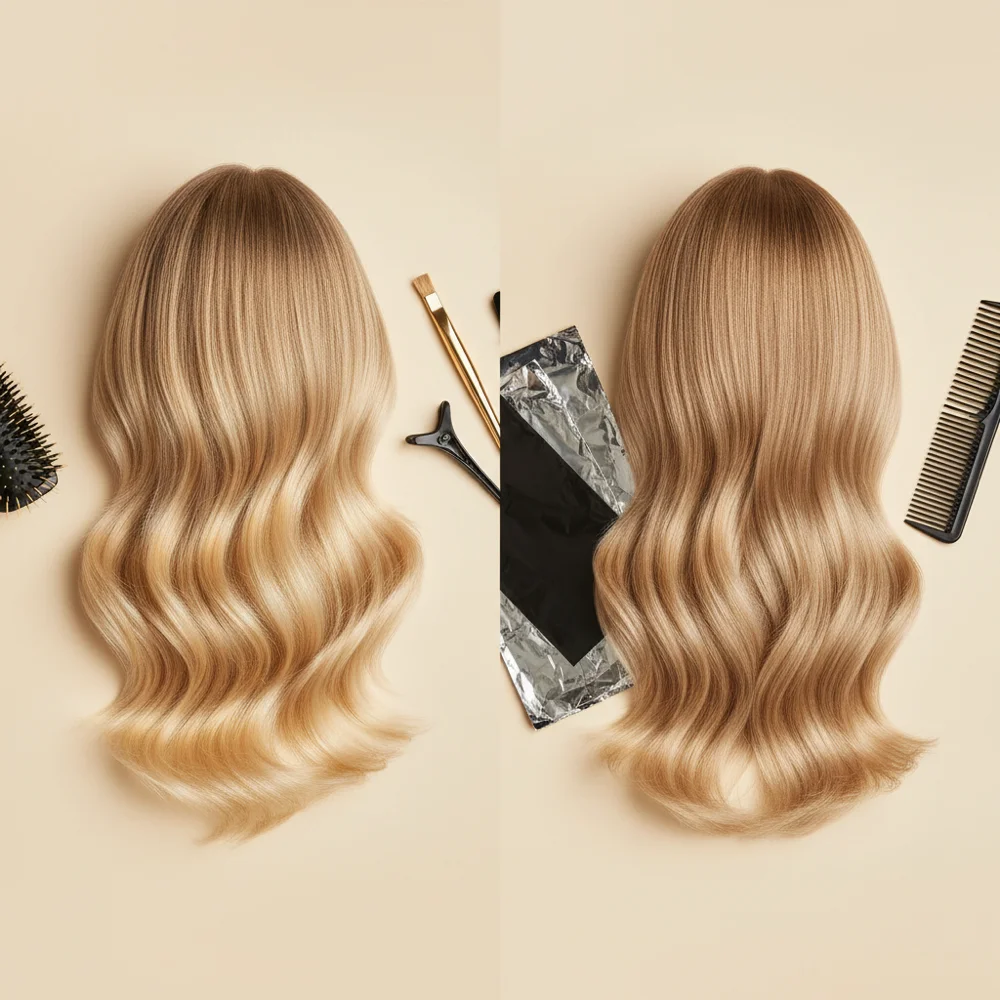
Not sure which technique to recommend? With Blendsor you can:
- Show examples of each technique to your client
- Consult specific formulas for each method
- Calculate the product needed based on length and density
- Save exact formulas to the client’s card
The AI helps you formulate considering the current level, goal, and chosen technique.
Frequently Asked Questions
Is balayage or highlights better for dark hair?
For dark hair (levels 2-4), foil highlights or foilyage typically work better. Foils retain heat and provide the lifting power needed to go from dark to blonde. Pure balayage on very dark hair often results in orange or copper tones rather than the desired blonde.
Which lasts longer: balayage or highlights?
Balayage lasts longer between appointments because the technique creates soft root transitions that grow out naturally. Traditional highlights create defined lines at the root that become visible within 4-6 weeks. Balayage can last 3-4 months before needing a refresh.
Can you do balayage on short hair?
Yes, but it requires more skill. The gradient effect needs enough length to transition smoothly—typically at least chin-length works best. For very short hair, babylights or micro-highlights often achieve a more natural result than balayage.
How much does balayage cost compared to highlights?
Balayage typically costs 20-50% more than traditional highlights because it requires more time, artistic skill, and product placement precision. However, the lower maintenance schedule means fewer annual appointments, often making it more cost-effective long-term.
Key Takeaways
- Balayage: Freehand, natural gradient, low maintenance, best for levels 5+
- Foil highlights: Controlled lift, defined contrast, requires more maintenance
- Babylights: Ultra-fine, subtle dimension, great for conservative clients
- Foilyage: Best of both—balayage placement with foil lifting power
- Always consider: Maintenance tolerance, desired contrast, current level, gray coverage needs
Want help choosing the right technique? Blendsor analyzes your client’s hair and recommends the optimal method with precise formulations.
Want scientific precision in your formulas?
Blendsor analyzes photos and generates exact formulas for your clients.
Try for free